

- Website
- Pošlji email
- 05) 708 21 00
- Get directions
- prev
- next
About
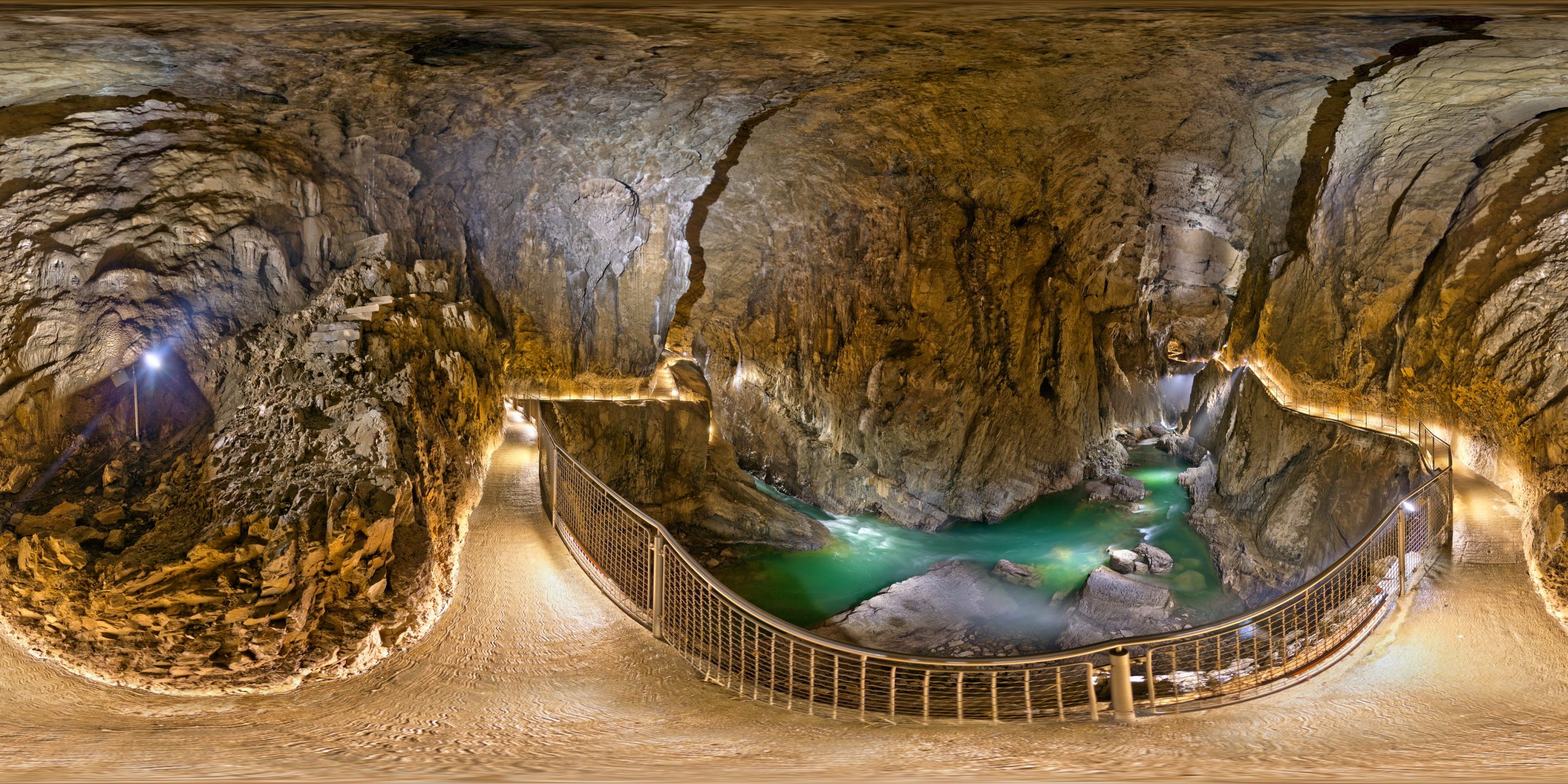
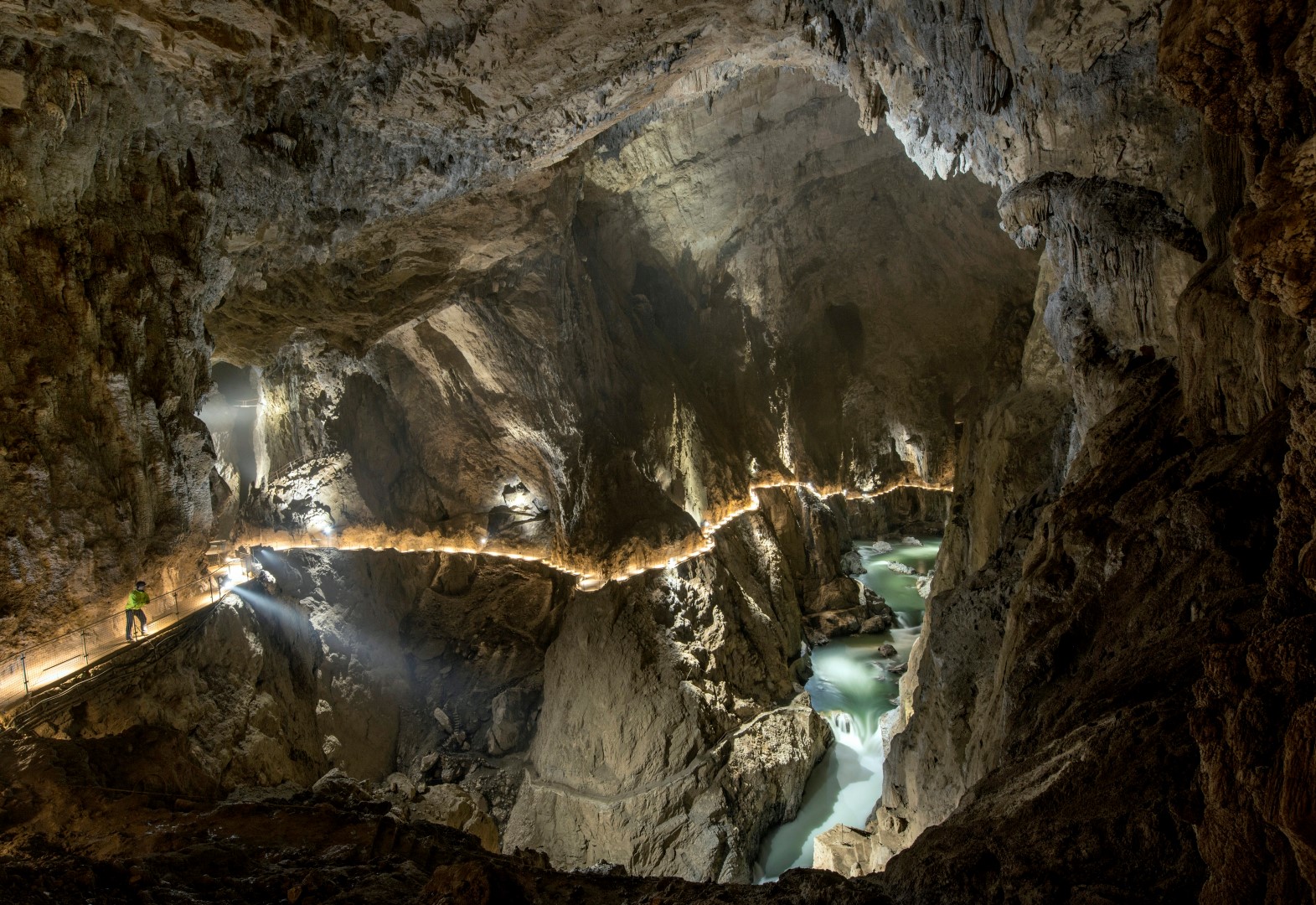
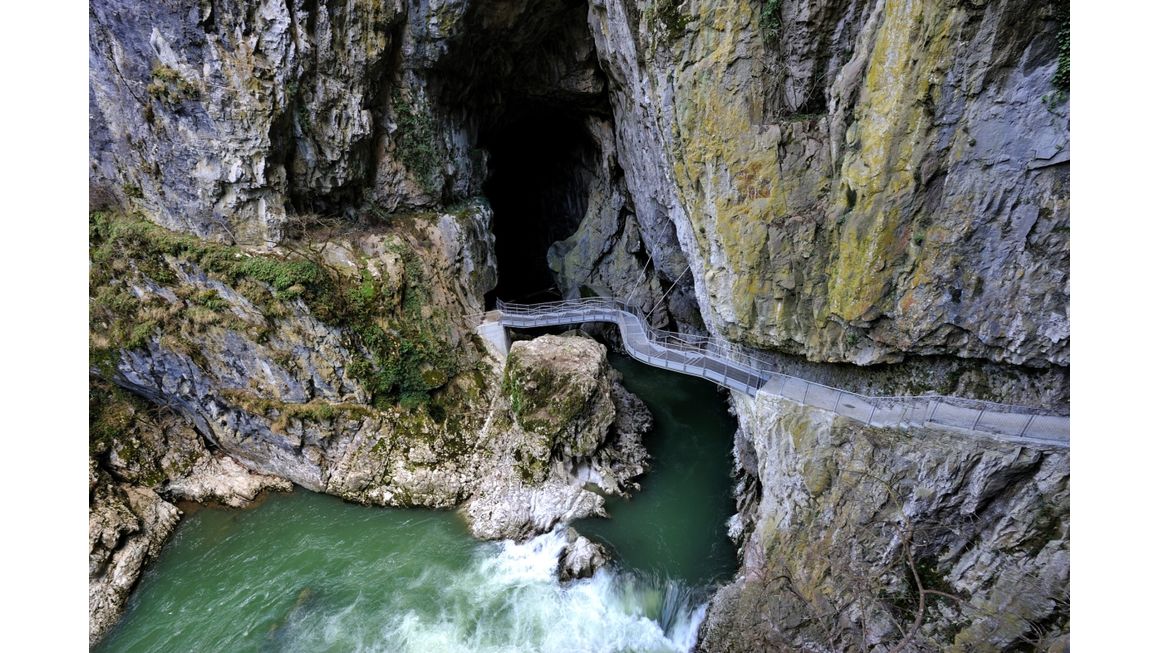
The Škocjan Caves are a system of water caves through which the river Reka flows. They are located near Divača in the Slovenian Karst. Their characteristic geological formation is pans. On November 28, 1986, the Commission for World and Natural Heritage at UNESCO included the Škocjan Caves in the Convention on the Protection of World Cultural and Natural Heritage - that is, in the list of world heritage. On October 24, 2004, the Škocjan Caves Regional Park was also entered on the UNESCO list of MAB biosphere reserves.[5] The Škocjan Caves are also a control point on the Slovenian Mountain Route. The first recorded document is from 1819, an official report to the district office in Sežana, in which an unknown writer describes the Škocjan Caves. 20 years later, Jakob Svetina from Trža, the master plumber, went down 120 m down the river by raft into the interior of the caves in order to find out how to capture the water for the Trieste water supply. At that time (in 1851), the miners from Idrija descended the deepest - 450 m. The word about the beauty of the Škocjan Caves spread throughout Europe in the 19th century. The cave attracted speleologists Dr. Adolf Schmidl and the Miller brothers from Vienna, Anton Hanke and Viljem Putick from the Czech Republic and Josip Marinič from Trieste, and later many Italians. The first breakneck paths were run by men from nearby villages, who were also excellent guides. The part of the caves where today's tourist tour begins - the Silent Cave - was discovered by local guides in 1904. The first explorers were not interested in the cave, because it is a blind sleeve without running water. In 1938, a short tunnel was made from the Globočak valley for more comfortable access for visitors. In 1958, electric lighting was arranged in the caves.
Location
Matavun 12, Divača, Slovenija