



- Website
- Pošlji email
- 01) 786 25 74
- Get directions
- prev
- next
About
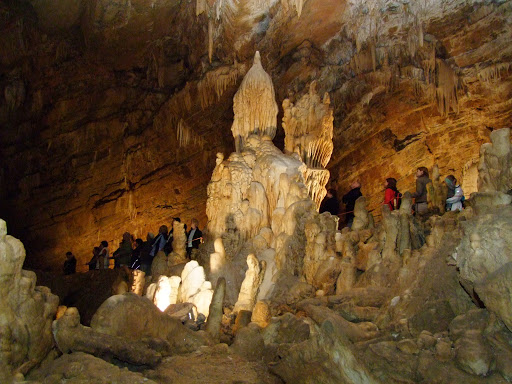
Grosuplje and its surroundings are still relatively undiscovered in terms of tourism, but it is worth exploring. The area where Dolenjska begins is characterized by karst natural peculiarities, as well as interesting cultural heritage. The Grosuplje area was first inhabited around 500 BC. n. no., and the place experienced its first written mention in 1136. Today, Grosuplje is a developed craft and industrial town, the rapid development of which is mainly made possible by the proximity of Ljubljana and good transport connections. A suburban LPP bus runs to Grosuplje, line 3G. You can also come from Ljubljana by train. The surroundings of Grosuplje boast both a rich cultural heritage and natural beauty. Among the most interesting are Magdalenska gora, Tabor nad Cerovim, Županova jama and Radensko polje. Županova jama is the most beautiful cave in Dolenjsko. It is 360 meters long, and its maximum depth is 77 meters underground. The cave consists of eight halls, seven of which are accessible to visitors. On display are all typical underground karst specialties such as chasms, tunnels, halls, stalactites of all kinds, zigzag pans and, in winter, ice stalactites. Guided tours of the cave take place every Saturday, Sunday and holiday at 3:00 p.m. (or by agreement for groups). Camp above Cerov with the church of St. Nicholas is one of the few preserved anti-Turkish camps and one of the most important cultural and historical monuments in Slovenia. You can meet him on a guided tour every Sunday at 4:30 p.m., i.e. after a tour of Župan's Cave. The learning trail In the footsteps of the kingfisher in Log pod Cerovi leads you through the forest and through wetlands and offers the opportunity to get to know the natural heritage and observe birds. The Radensko polje landscape park is one of the most prominent karst fields in Slovenia. Water flows into the field from the surrounding hills and on it it sinks into a series of underground caves and sinkholes. During heavy rains, when the waters cross the banks of Retija and Jam, Radensko polje turns into a large lake, in the middle of which rises the lonely hill of Kopanj. The waters that sink in the Radensko polje flow again during the day in the springs of the Krka. Wet meadows in Radensko polje provide habitat for many endangered plants and animals. Due to its rich habitat and endangered species, Radensko polje is included in the European ecological network Natura 2000.
Location
Adamičeva cesta 15, Grosuplje, Slovenija